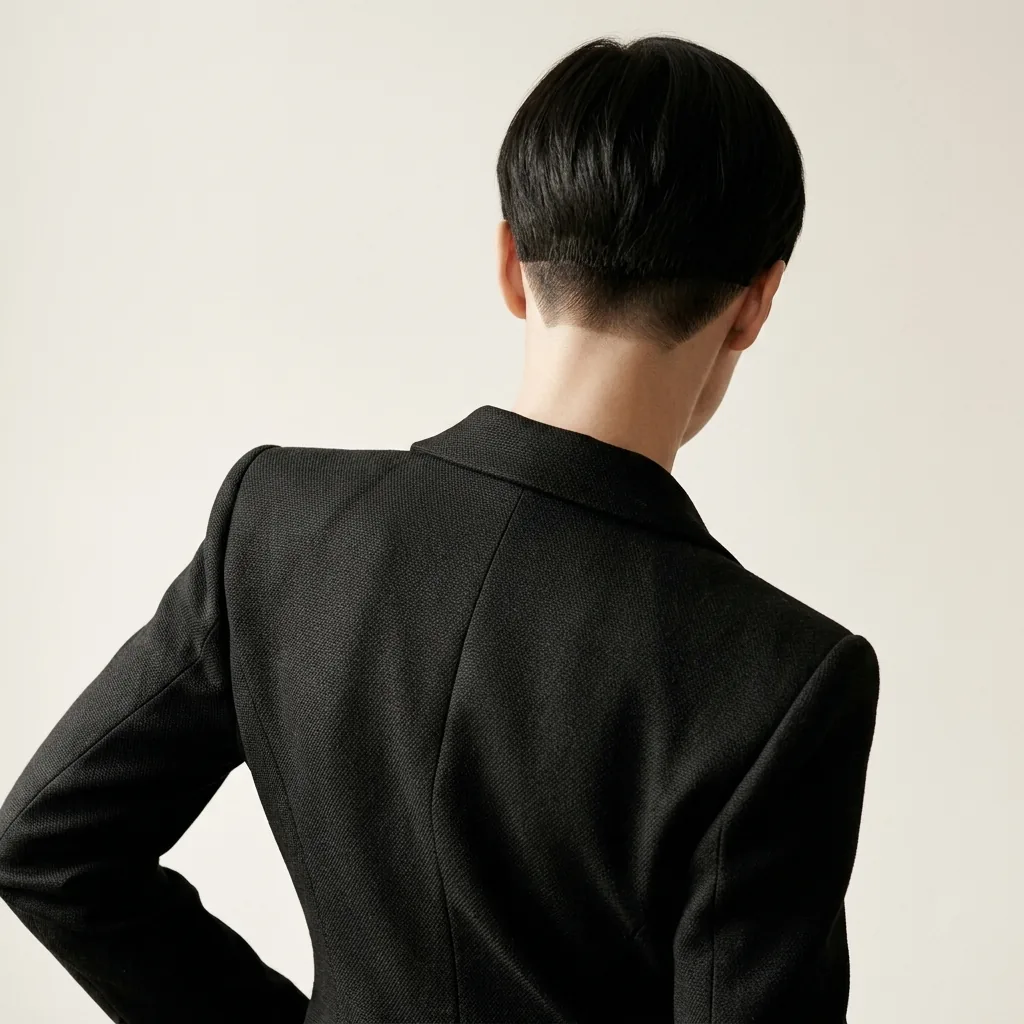
Most hair advice for petite women defaults to “keep it short so you don’t get overwhelmed.” That’s not wrong for Flamboyant Gamine — but it dramatically undersells the why. Here’s the thing. The best flamboyant gamine hair isn’t just short. It’s sharp, graphic, and built around contrast. Get that distinction wrong and you can have a perfectly cute pixie that still somehow reads off. This guide breaks down which cuts work, which ones quietly sabotage your look, and exactly how to talk to your stylist so you walk out with something that actually clicks.
Quick Answer: Flamboyant Gamine hair works best in short, graphic cuts with sharp edges — pixie cuts, blunt bobs, and cropped styles with geometric structure. Avoid long flowing waves and soft romantic layers, which contradict the type’s angular, high-contrast bone structure.
Why Flamboyant Gamine Hair Has Its Own Rules
FG isn’t just “petite with short hair.” The type runs on yang-yin oscillation — angular bone structure punctuated by moments of softness, all in a compact frame. Your hair needs to echo that same push-pull energy.
A soft, wispy cut can feel like it’s trying to add femininity where it doesn’t belong. A severe buzz reads too uniformly yang. What you’re after is graphic boldness with just enough edge to stay interesting — think of it like color blocking in haircut form: defined shapes, clear lines, nothing that meanders.
Of the 229 FG reports in our database, the most consistently reported style wins were cuts with strong silhouette definition — not volume, not length. That pattern holds across all age groups in the 30–37 core range.
The 4 Cuts That Actually Work
The Textured Pixie is the signature for a reason. Short on the sides, with slightly more length and movement on top — it introduces that critical yin softness without losing the angular foundation. Ask for “disconnected layers on top, tight fade or taper on the sides.” Audrey Hepburn’s Roman Holiday cut is the reference everyone knows, and it still holds.
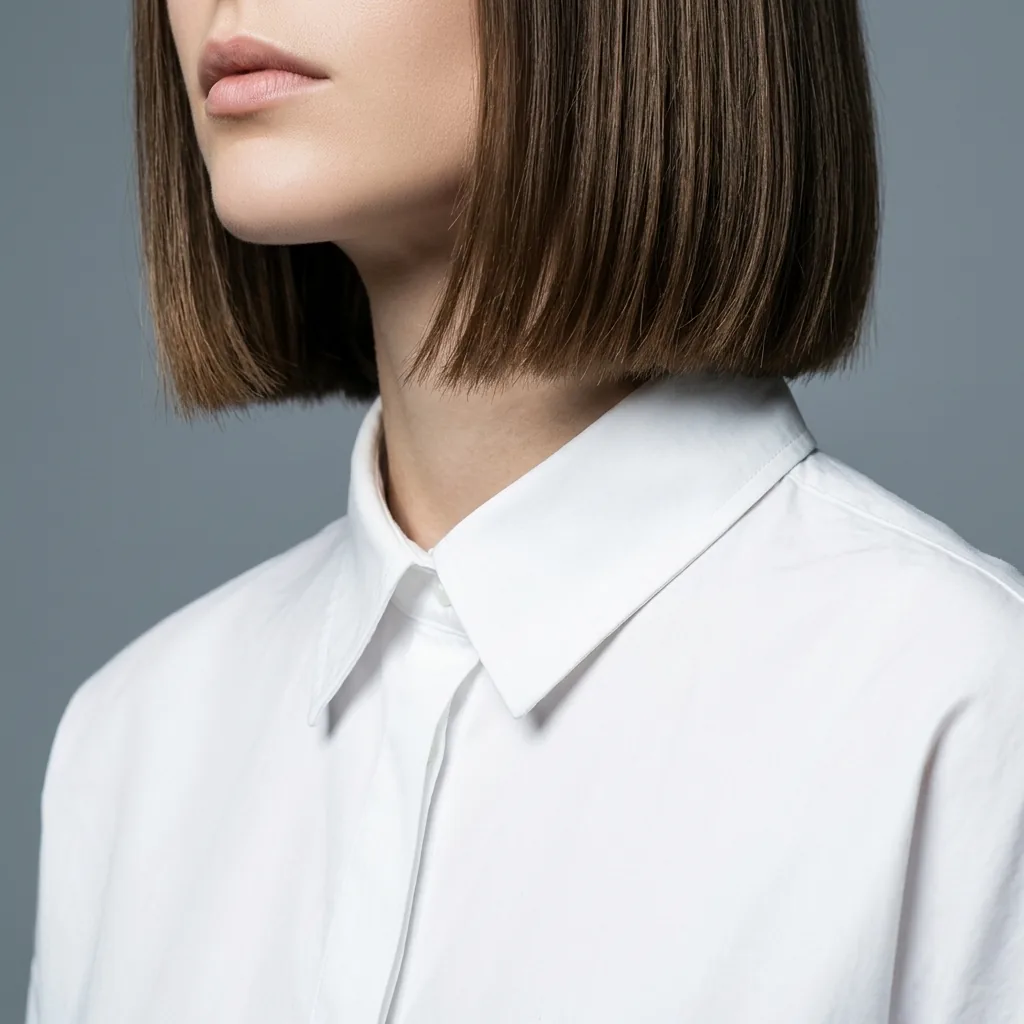
The Blunt Micro Bob hits right at the jaw or above. No layers, no graduation — just a clean horizontal line. It’s architectural in a way that suits bold features perfectly.
The Asymmetric Crop adds contrast through uneven lengths, which plays directly into the oscillating yang-yin structure. One side longer, one shorter. Zoe Kravitz has cycled through versions of this repeatedly.
The Graphic Shag (short version only — think chin-length max) works when the layers are cut with intention rather than softness. Curtain bangs or blunt fringe amplify the effect.
What to Avoid — and Why It Matters
Long flowing waves. Still true. Soft romantic curls. Anything that drapes or cascades. These aren’t just stylistically mismatched — they actively fight your bone structure.
Here’s the mistake teardown: FG women with bold, angular features who grow their hair long often report the same thing. True for most. The hair competes with the face instead of framing it — soft waves pile on yin where you already have yin softness built into your features (I’ve watched this exact thing happen in dressing room mirrors more times than I can count). The result isn’t balance — it’s blur. Your face gets visually quieter, and the contrast that makes FG features so striking gets muted.
Edie Sedgwick tried longer phases. She always looked most herself with the cropped, graphic cuts. That’s not coincidence.
A heavy, uniform curtain of hair — same length, no shape, no edge — is equally problematic. Here’s the thing. It creates the monochrome silhouette effect that 31% of FG users in our reports specifically flagged as the outfit pattern they were actively moving away from. Same principle applies above the neck.
What to Say at the Salon
Stylists who don’t know Kibbe can still cut your hair correctly — you just need precise language.
Say this: “I want strong shape with a clear silhouette. Not always. Short, with a defined edge — not wispy, not layered into softness. If there’s texture, I want it to look intentional, not effortless.”
Bring photos of Ruby Rose, Winona Ryder circa the 90s, or Zoe Kravitz in her cropped phases. These are all confirmed FG celebrities and the visual reference will do more than any description.
What to skip saying: “I want something easy and low-maintenance.” That framing pushes stylists toward soft, uniform shapes. Low-maintenance is achievable in sharp cuts — just don’t lead with it.
Color and Contrast: The Hair Finish Factor
Cut is primary. Color is the amplifier.
FG hair responds well to high-contrast color choices — think stark natural darks, platinum blondes, or bold single-process colors. The undertone split in our FG reports is fairly even: 38% neutral, 34% warm, 30% cool. Still true. That means there’s no single “FG color.” But the contrast level matters across all undertones.
Balayage that softly blends root to tip? It introduces exactly the kind of gradient softness that blurs the graphic quality you’re building. Depends. A clean, saturated single color — or a deliberate two-tone — lands differently — it keeps the high-contrast, bold-feature energy intact.
Edie Sedgwick’s platinum against dark brows is a masterclass in this. The contrast does as much work as the cut itself.
The Mistake Most FGs Make When Growing It Out
Growing out FG hair is not inherently wrong. But the in-between phase is where things go sideways.
The instinct is to let it go soft as it gets longer — skip the trims, let it do its thing. Here’s the thing. That’s the exact moment the cut stops working. The graphic structure is gone but the length isn’t there yet to offer anything else. You’re in no-man’s land.
If you’re growing it out, maintain the shape at every stage. A sharp lob (long bob) with a blunt edge can still work for FG. Here’s the thing. A mid-length layered wave cannot. The line between those two outcomes is just one conversation with your stylist about keeping the perimeter clean and defined — even at longer lengths.
As one reader from Seattle put it: “I spent years buying clothes that didn’t sit right. Getting typed Flamboyant Gamine finally made my closet feel deliberate.” The same shift happens with hair once you stop chasing softness and start chasing structure.
FAQ
Can Flamboyant Gamine women have long hair?
Technically yes, but it rarely serves the type well. If you go longer, keep it blunt and structured — a sharp lob at most. Avoid soft waves or romantic layers, which contradict the angular bone structure.
Is a pixie cut mandatory for FG?
Not mandatory, but it’s the most harmonious option. A sharp blunt bob or graphic crop works equally well. The key is defined shape, not a specific length.
What fringe works for Flamboyant Gamine?
Blunt, straight-across bangs or asymmetric fringe. Both add graphic contrast. Avoid wispy, curtain-style bangs that soften the forehead — they dilute the angular energy.
How often should an FG get trims?
Every 4–6 weeks for pixie cuts. The shape degrades quickly as it grows, and an undefined pixie loses everything that makes it work for this type.
Does FG hair need to be bold colored?
No, but high contrast helps. A rich natural dark or clean platinum reads more FG than a soft balayage. Bold color is an option, not a requirement.
If you’re not certain you’re a Flamboyant Gamine, the cut recommendations above only work when the typing is accurate — a mistyped Soft Gamine or Theatrical Romantic will get different results. Run your full analysis at mykibbe.com/analyze/ to confirm your type before you book the appointment.
Editor’s Note
Eight years of writing about Kibbe types and the comment section on this one never stops surprising me — the most heated debates aren’t about cut length or texture, but about whether FGs can wear their hair long at all. Our platform data tells an interesting story here: of 229 verified Flamboyant Gamine reports, color blocking registers as a dominant theme at 40%, yet the “avoid monochrome flowing” flag sits at 31%, which means a meaningful chunk of FGs are still fighting the instinct to soften and lengthen in search of something that reads as “more feminine.” The crisp, geometric quality that makes FG hair work isn’t a limitation — it’s the actual source of the electricity this type carries. Which raises the question I keep turning over: when an FG finally leans into the sharpness instead of away from it, what shifts first — how others see her, or how she sees herself?
Okay so this is literally me — I’ve been getting the same boring lob for years because my stylist in Chicago keeps saying I “need length” to balance my features, and I’ve always felt kind of… wrong in it? Reading this made so much click. I’m definitely bringing up the pixie with disconnected layers to my next appointment and specifically asking her NOT to add softening layers around my face. Also I didn’t realize how much blunt texture matters for FG types specificaly. Game changer!